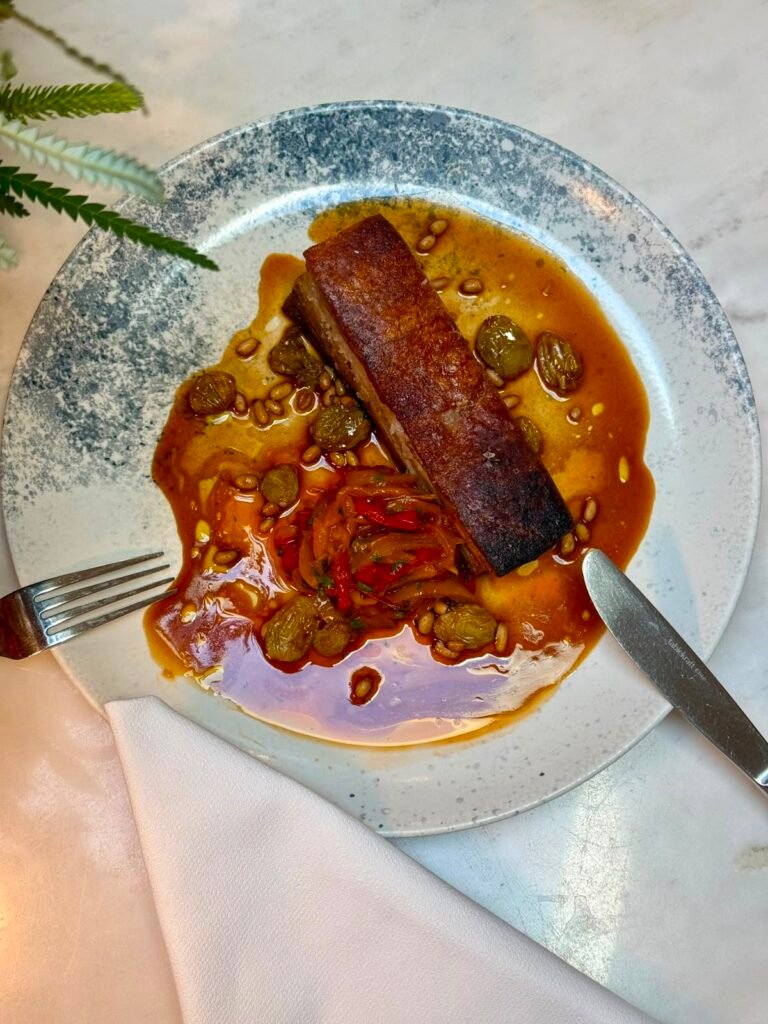
Crispy Pork Belly with Peperonata and Agrodolce Sauce · Excerpt: Slow-cooked pork belly pressed and seared until crisp, served with sweet peppers and a sticky sweet-and-sour sauce with raisins and pine nuts.
This one’s a weekend project, but almost all of the time is hands-off. The pork belly cooks low and slow until it’s meltingly tender. Then I press it overnight in the fridge, cut it into neat bars and sear them until the outside is deep brown and crunchy. It’s a restaurant trick, and it’s much easier than it sounds.
Pork belly is rich, so it needs something sharp and sweet next to it. That’s where the peperonata comes in, along with a glossy sweet-and-sour sauce (Italians call it agrodolce) full of plump raisins and pine nuts. Mop up every drop with some crusty bread.
Serves: 4 · Prep: 30 minutes, plus overnight pressing · Cook: about 3½ hours
Ingredients
For the pork belly
- 1 kg boneless pork belly, skin removed (ask your butcher)
- 1 tbsp fennel seeds, lightly crushed
- 2 tsp sea salt
- 1 brown onion, roughly chopped
- 4 garlic cloves, bashed
- A few sprigs of thyme and 2 bay leaves
- 250 ml (1 cup) dry white wine
- 500 ml (2 cups) chicken stock
For the peperonata
- 3 tbsp olive oil
- 1 red onion, thinly sliced
- 2 red capsicums and 1 yellow capsicum, thinly sliced
- 2 garlic cloves, sliced
- 2 ripe tomatoes, chopped
- 1 tbsp red wine vinegar
- A pinch of sugar
- 1 tbsp chopped parsley
For the agrodolce sauce
- 60 g (⅓ cup) golden raisins or sultanas
- 60 ml (3 tbsp) sherry vinegar
- 1 tbsp honey
- The strained braising liquid from the pork
- 30 g cold butter
- 40 g (¼ cup) pine nuts, toasted
Method
- Season the pork. The day before, rub the pork all over with the fennel seeds and salt. If you have time, leave it uncovered in the fridge for a few hours.
- Braise it. Heat the oven to 150°C (130°C fan-forced). Put the onion, garlic, thyme and bay leaves in a snug roasting dish and sit the pork on top, fat side up. Pour in the wine and stock, which should come about halfway up the meat. Cover tightly with foil and cook for 3 hours, until a knife slides in with no resistance.
- Press it overnight. Lift the pork onto a tray lined with baking paper. Lay another sheet of paper and a second tray on top, and weigh it down with a few tins. Once it’s cool, put the whole thing in the fridge overnight. Strain the braising liquid into a container and refrigerate that too.
- Make the peperonata. Warm the oil in a wide pan over medium heat. Add the onion and capsicums with a pinch of salt and cook slowly for 25–30 minutes, stirring every so often, until they’re soft and jammy. Add the garlic and tomatoes and cook for 10 minutes more. Finish with the vinegar, sugar and parsley.
- Make the sauce. Lift the set fat off the top of the braising liquid and throw it away. Soak the raisins in the sherry vinegar for 10 minutes. Pour the liquid into a saucepan with the honey and simmer until it’s reduced by about two-thirds and lightly syrupy. Add the raisins and their vinegar and simmer for a minute. Take it off the heat and whisk in the cold butter for a glossy finish. Stir in the pine nuts.
- Sear the pork. Cut the pressed pork into 4 neat bars. Heat a heavy frying pan over medium-high heat with a dash of oil. Sear the bars fat side down for 4–5 minutes until deeply browned and crisp, then turn them to colour the other sides. Finish in a 200°C oven for 8–10 minutes to heat through.
- Serve. Spoon some peperonata onto each plate, lay the pork alongside and pour the warm sauce all around.
Tips
- Don’t skip the overnight press. It’s what gives you clean, even bars that sear properly, and it makes the next day really easy.
- Pork fat spits, so use a splatter guard or a lid held at an angle while you sear.
- The peperonata is even better the next day, so make it alongside the pork.